The Four Elements of Every Protocol
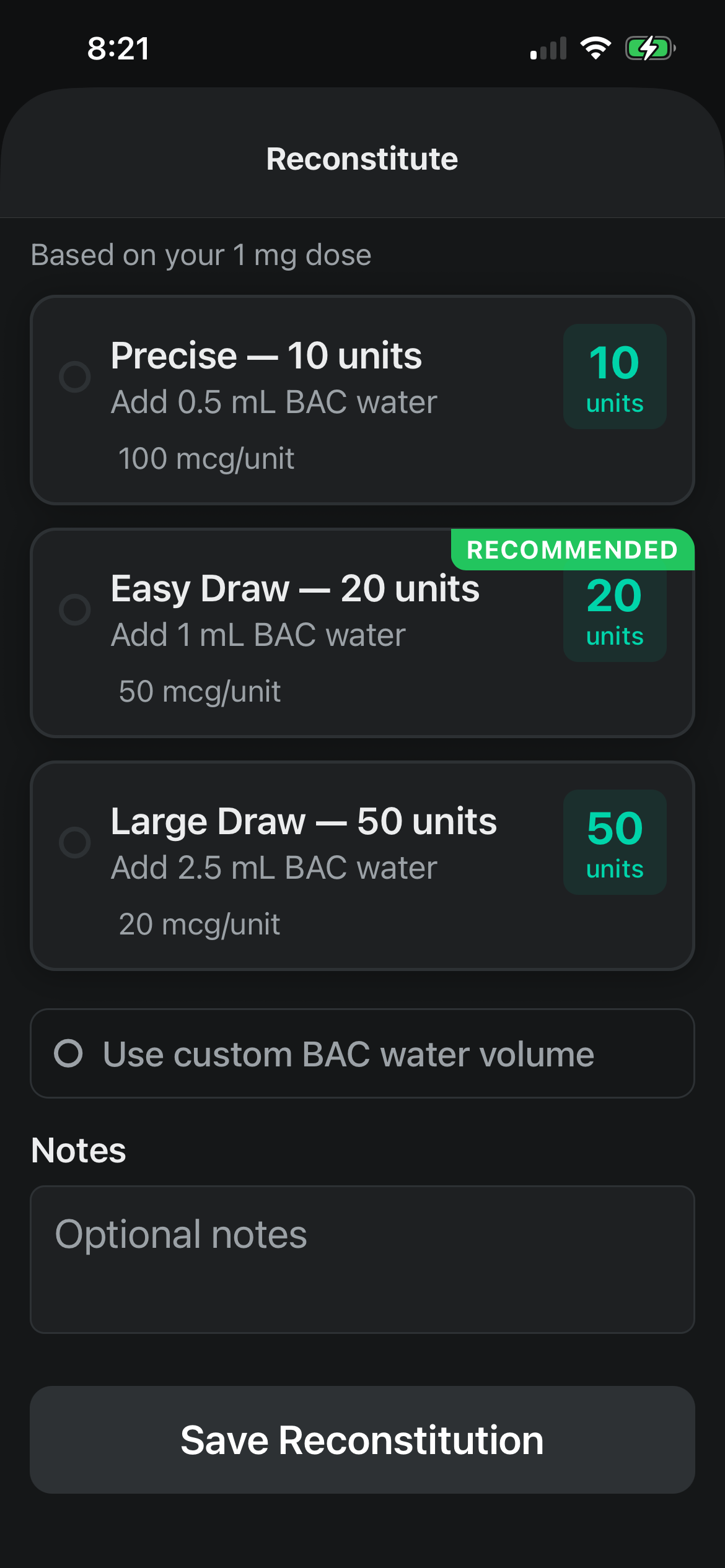
Protocol's calculator — set up your reconstitution before the first injection
Compound: The peptide itself — BPC-157, Ipamorelin, TB-500, or any of the 81 compounds in Protocol's research library. Each compound has a specific mechanism, typical dose range, and injection frequency.
Reconstitution: Mixing the lyophilized powder with bacteriostatic water to create an injectable solution. Vial size and BAC water volume determine concentration. The free reconstitution calculator at reconstitution.health handles this math — or use Protocol's built-in calculator.
Dosing schedule: Frequency (once daily, twice daily, every other day), timing (morning, pre-sleep), and cycle length (many peptides are run in 8–12 week cycles with breaks). Set this in Protocol's scheduling view before your first injection so upcoming doses appear automatically.
Injection tracking: Date, time, dose, site, and any notes. This becomes the data you actually analyze — adherence rates, side effect patterns, cycle length, and the context for any subjective changes you notice.
Logging Your First Injection
After reconstituting, add the compound to Protocol. Enter the vial size, BAC water volume used, and target dose — Protocol calculates and stores the concentration and syringe draw automatically. For every subsequent injection, you tap the compound, confirm the draw units, and log the site. The history builds automatically.

